
| Category | |
|---|---|
| artist | van Rijn, Rembrandt Harmenszoon |
| year | 1635 |
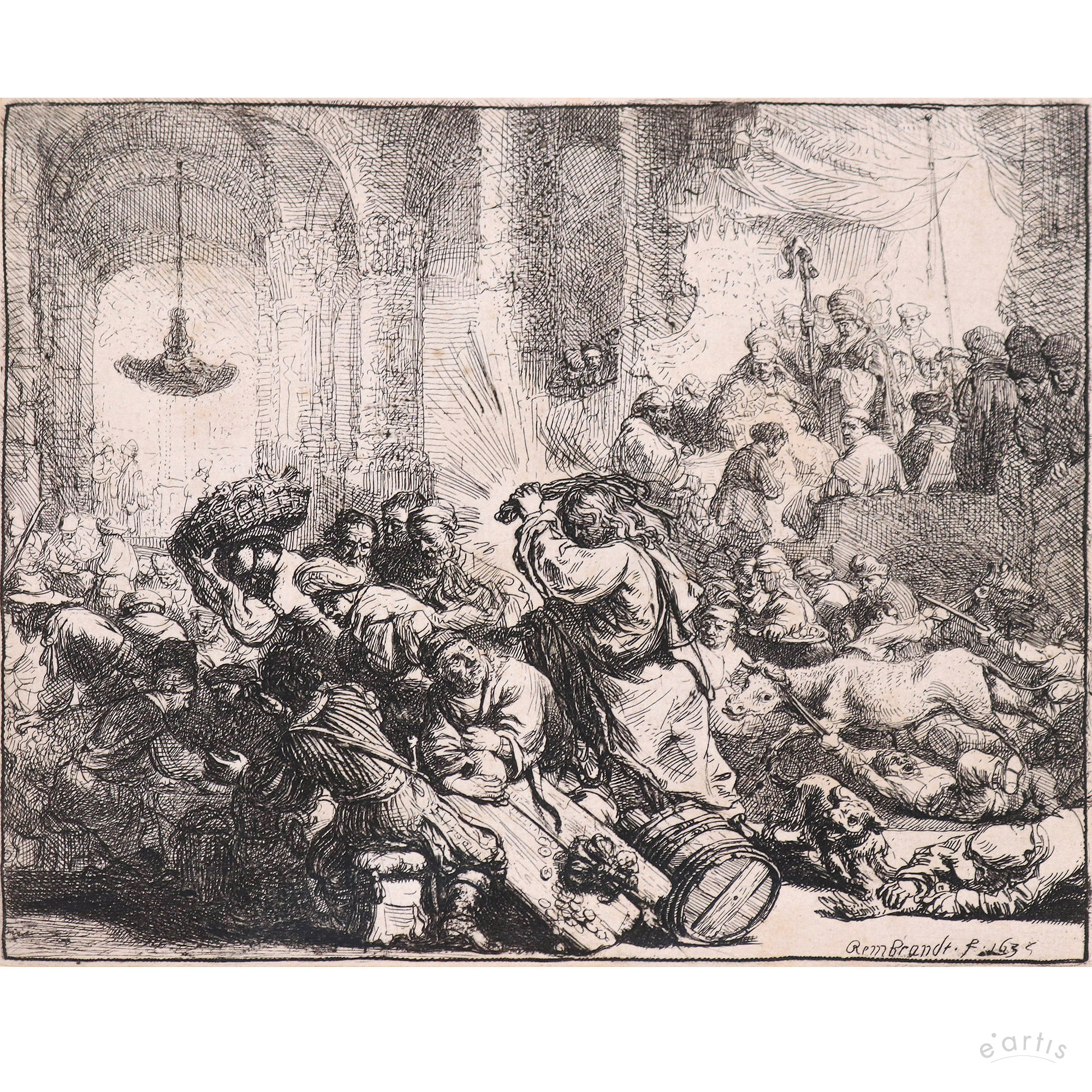
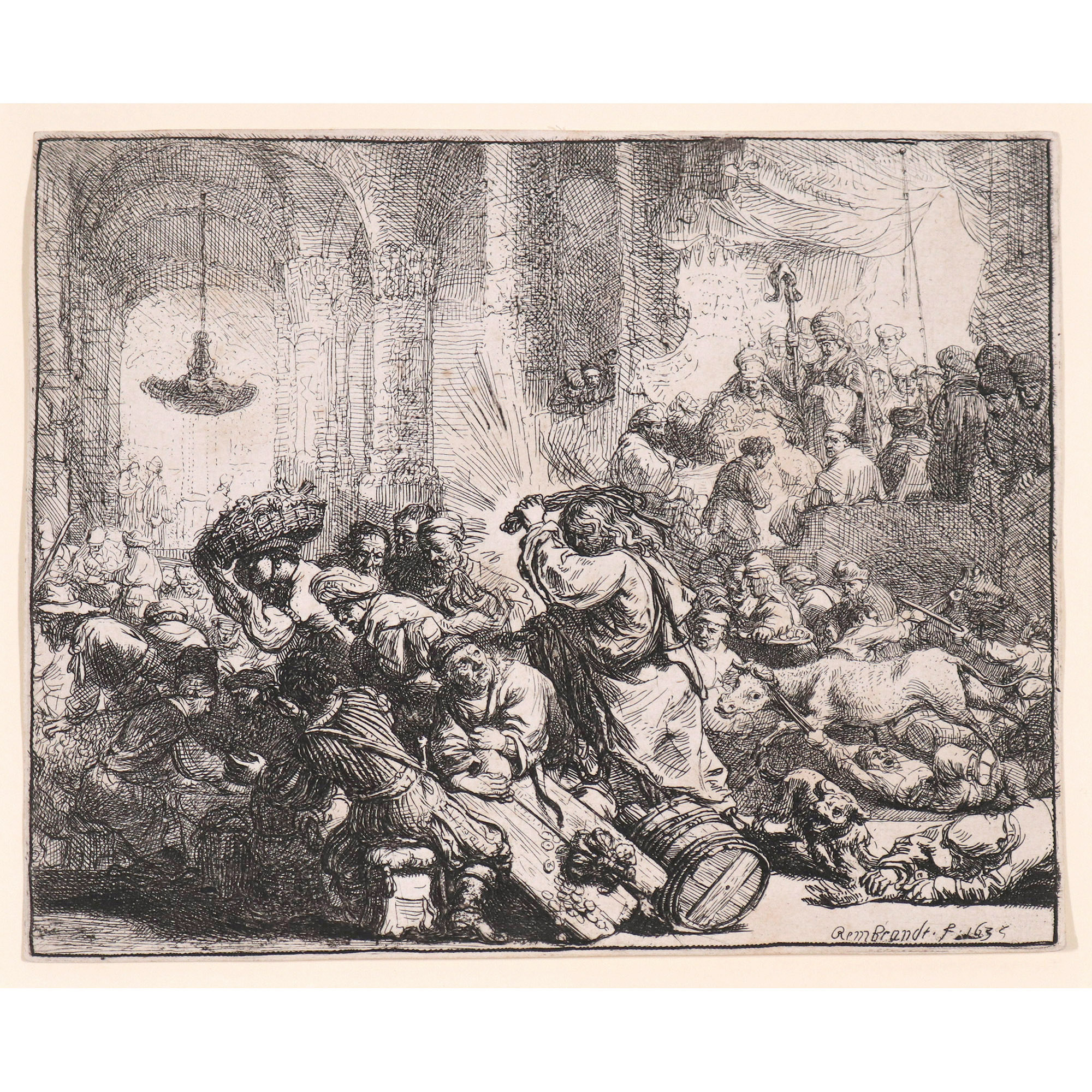
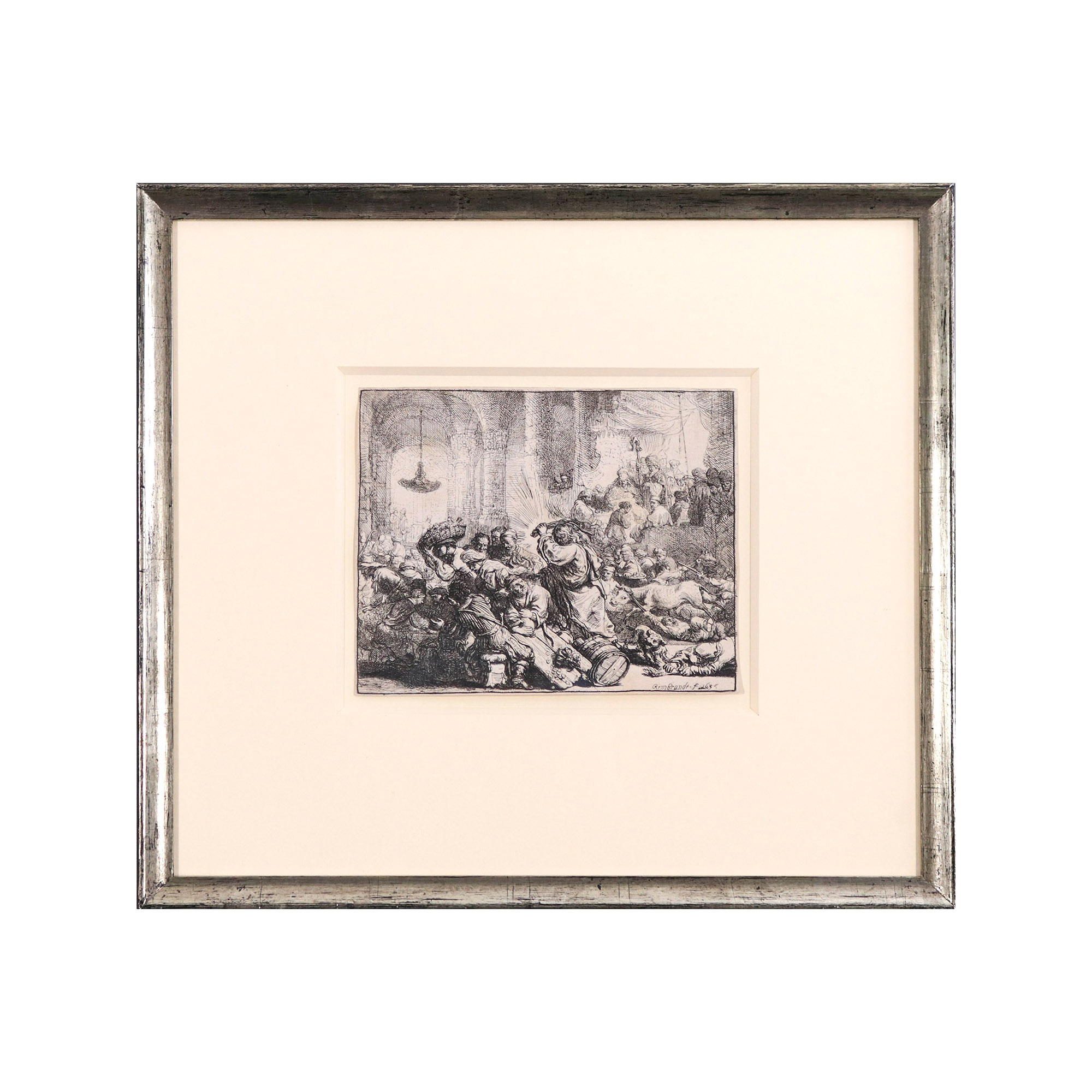
| Title | Christ driving the Money Changers from the Temple |
| size 1 |
Motif
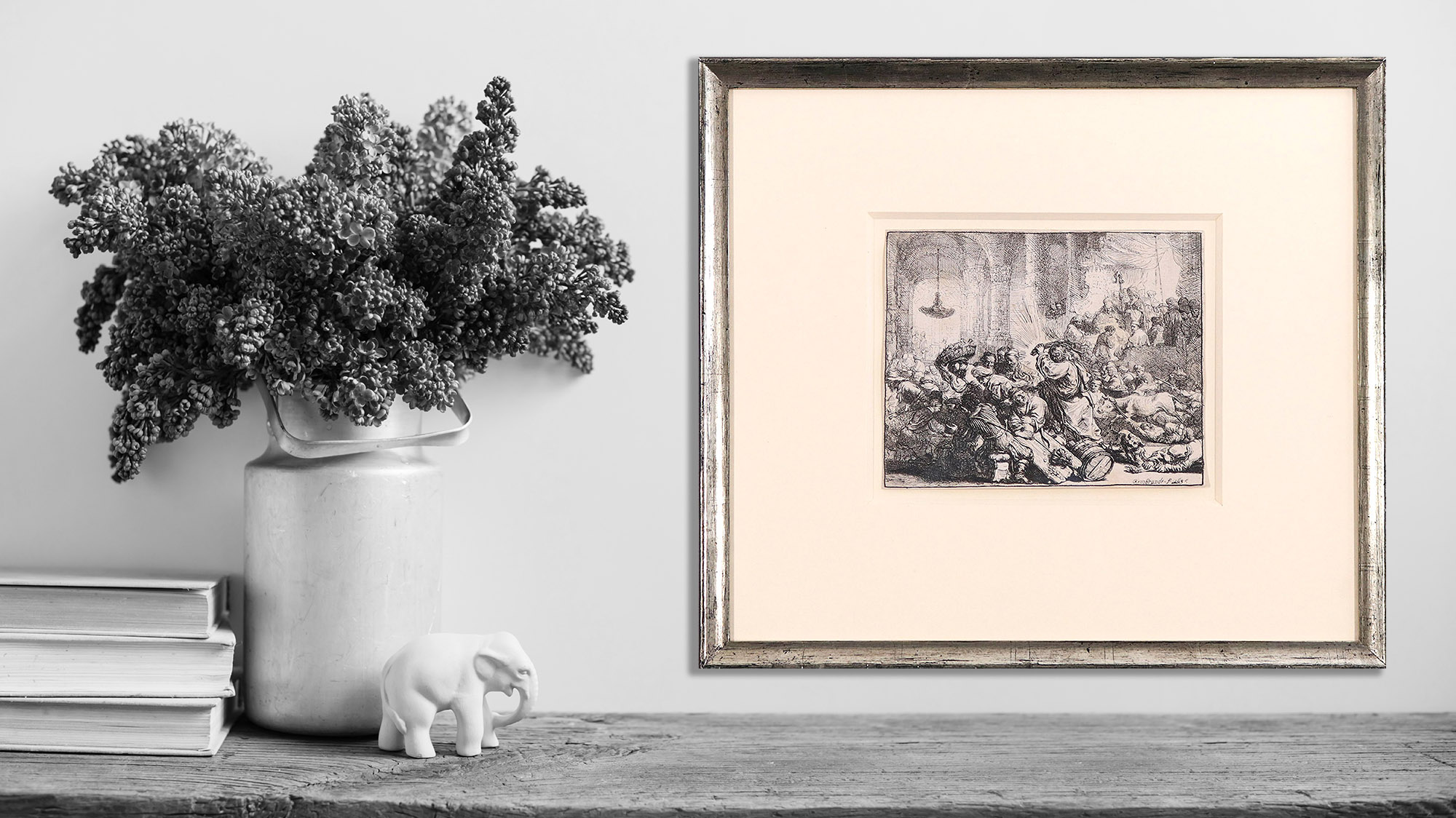
13,3 x 17,0 cm
Frame: 32,4 x 36,3 cm |
| material | Etching (drypoint) on laid paper |
| edition | Unique |
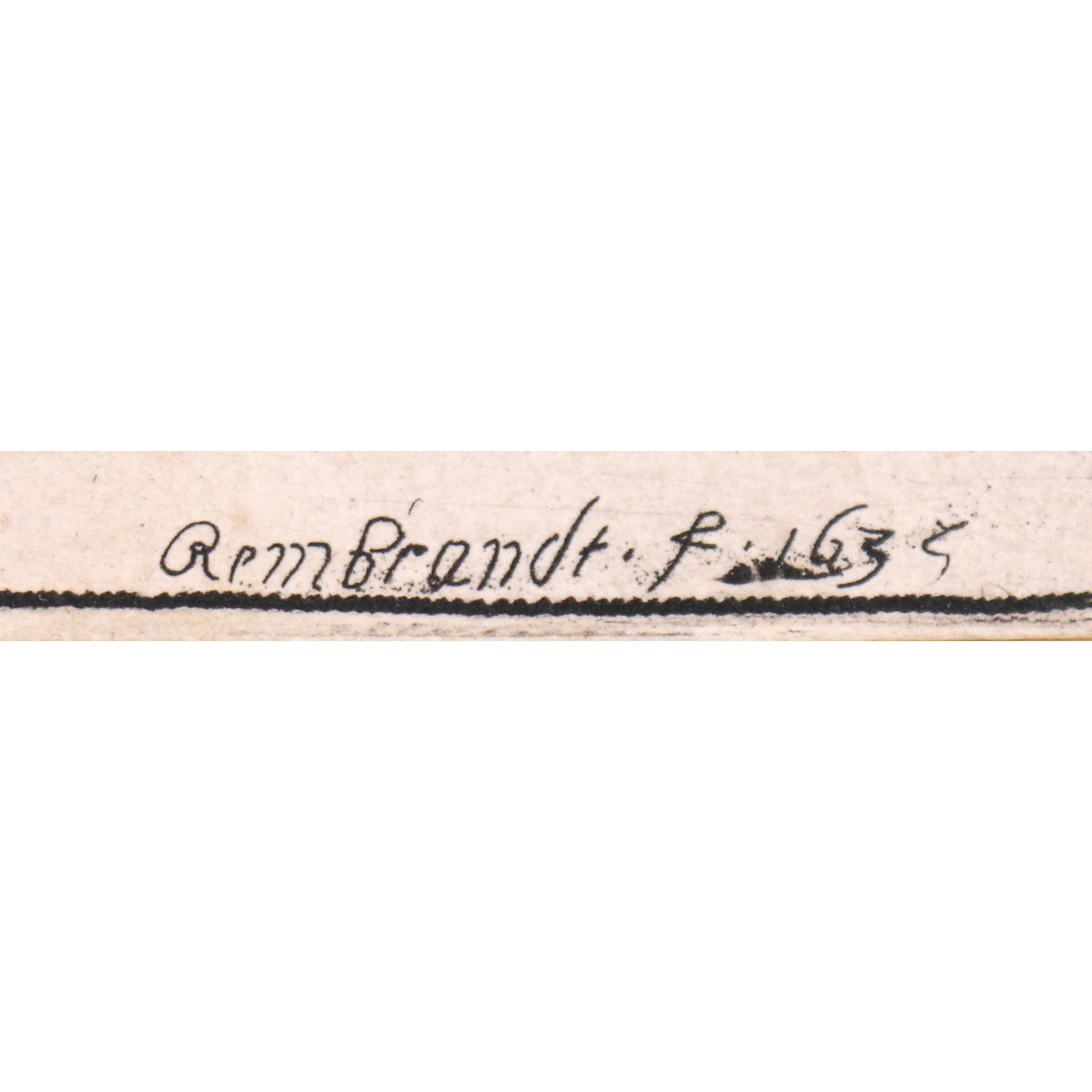
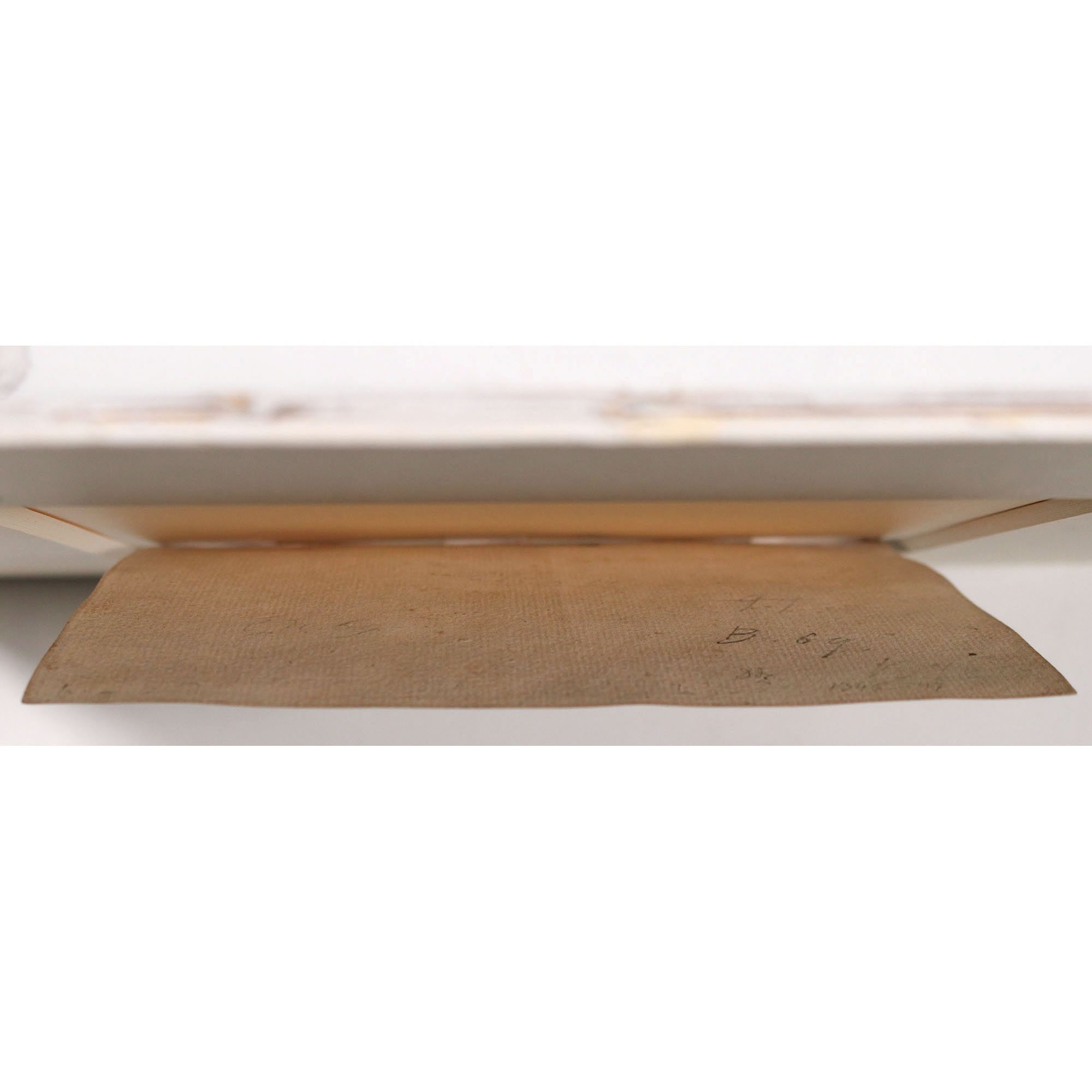
| signature | Signed and dated at the bottom right of the plate: Rembrandt f·1635 / Verso various owner's notes (see photos) |
| publication | Hinterding, E. & Rutgers, J. (Hrsg.) (2013). The New Hollstein. Dutch & Flemish Etchings, Engravings and Woodcuts 1450 - 1700. Rembrandt, Bd.1, S. 222, Nr. 139 I (von IV) |
| Provenance | Hermann Weber Collection (L. 1383) / Dr. A. Edler von Marenzeller Collection/ Christie's, London (Auction 1114, 20 March 2013, Lot 13) / Corporate collection of Ahlers AG, Herford / Bavaria Collection |
| rise in value | The market currently emphasises the relevance of the first state of this plate, which were printed during Rembrandt's lifetime: Recently on 03.12.2025 a copy of this etching by Rembrandt Harmenszoon van Rijn (13,6 x 16,9 cm) was sold at Christie's in London (Lot 42) for a price of 43,565 EUR. |
Rembrandt Harmenszoon van Rijn Christ driving the Money Changers from the Temple (1635)
- Valuable - Rare print of the first state
- Detailed and dramatic scene - Jesus cleanses the temple
- World-renowned baroque artist from the Netherlands
- In a frame
€25,500.00*
- The artwork is available immediately and can be viewed at any time in our gallery.
- Ready for shipment within 2 days.
- Free shipping within Germany.
Product number:
38491
Informations
condition
|
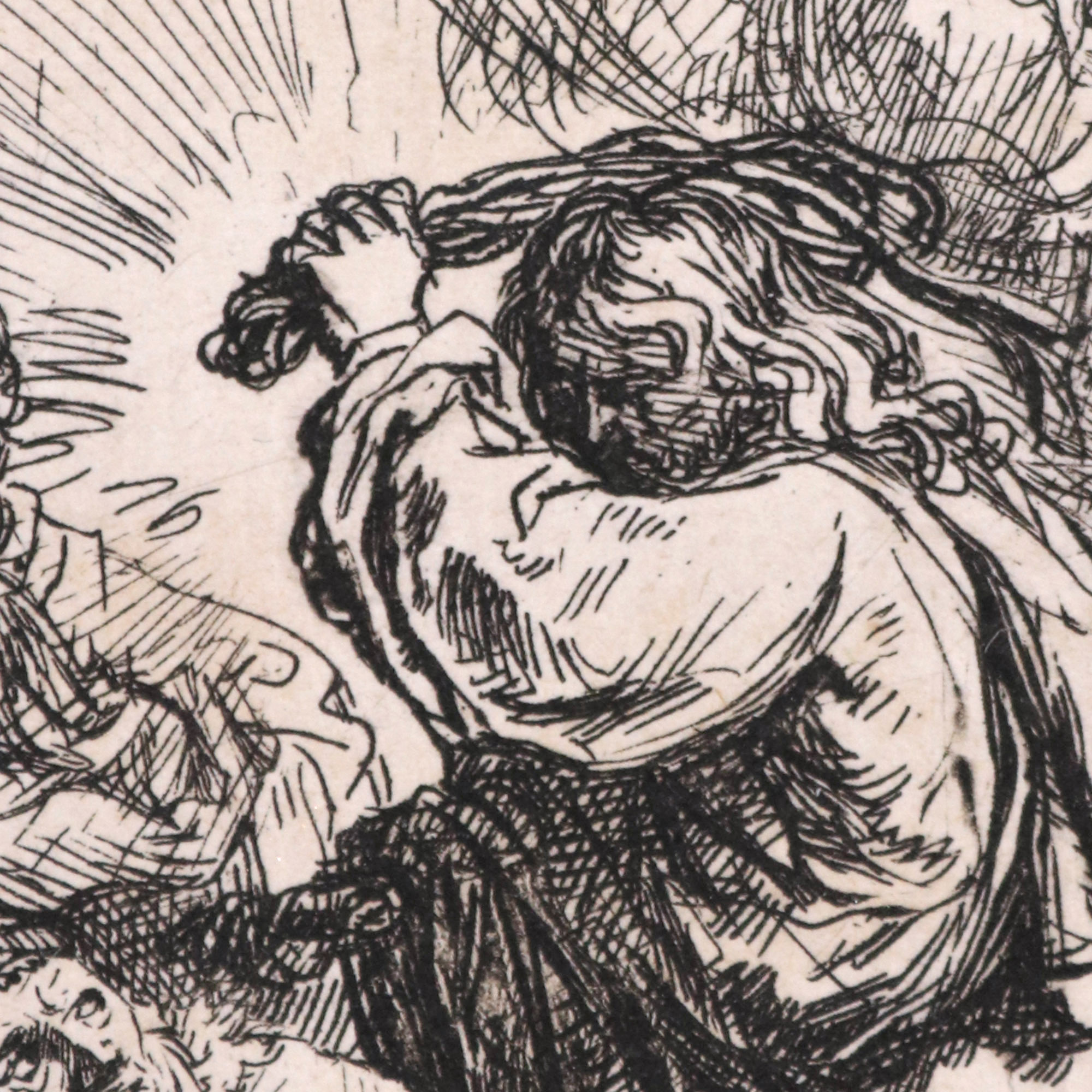
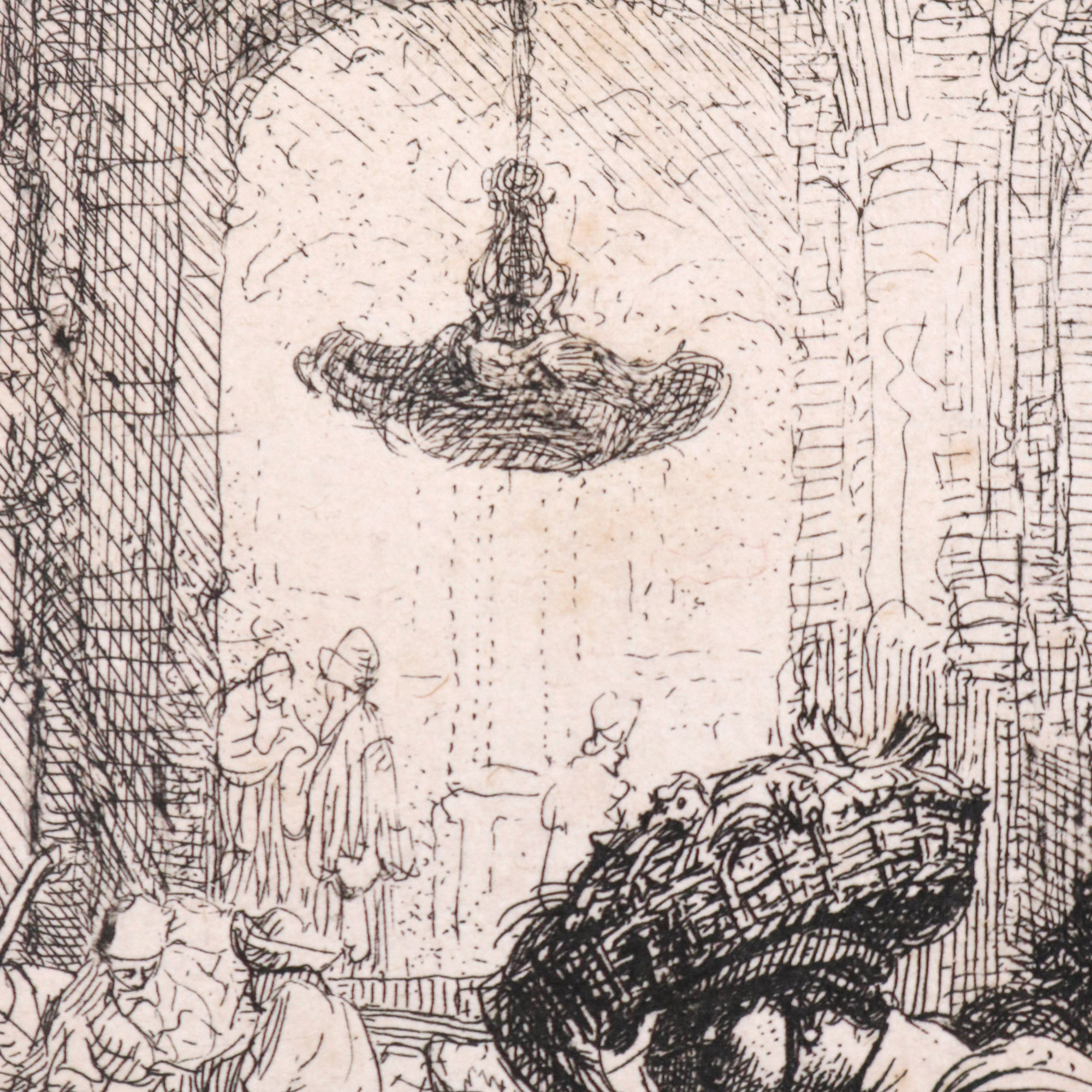
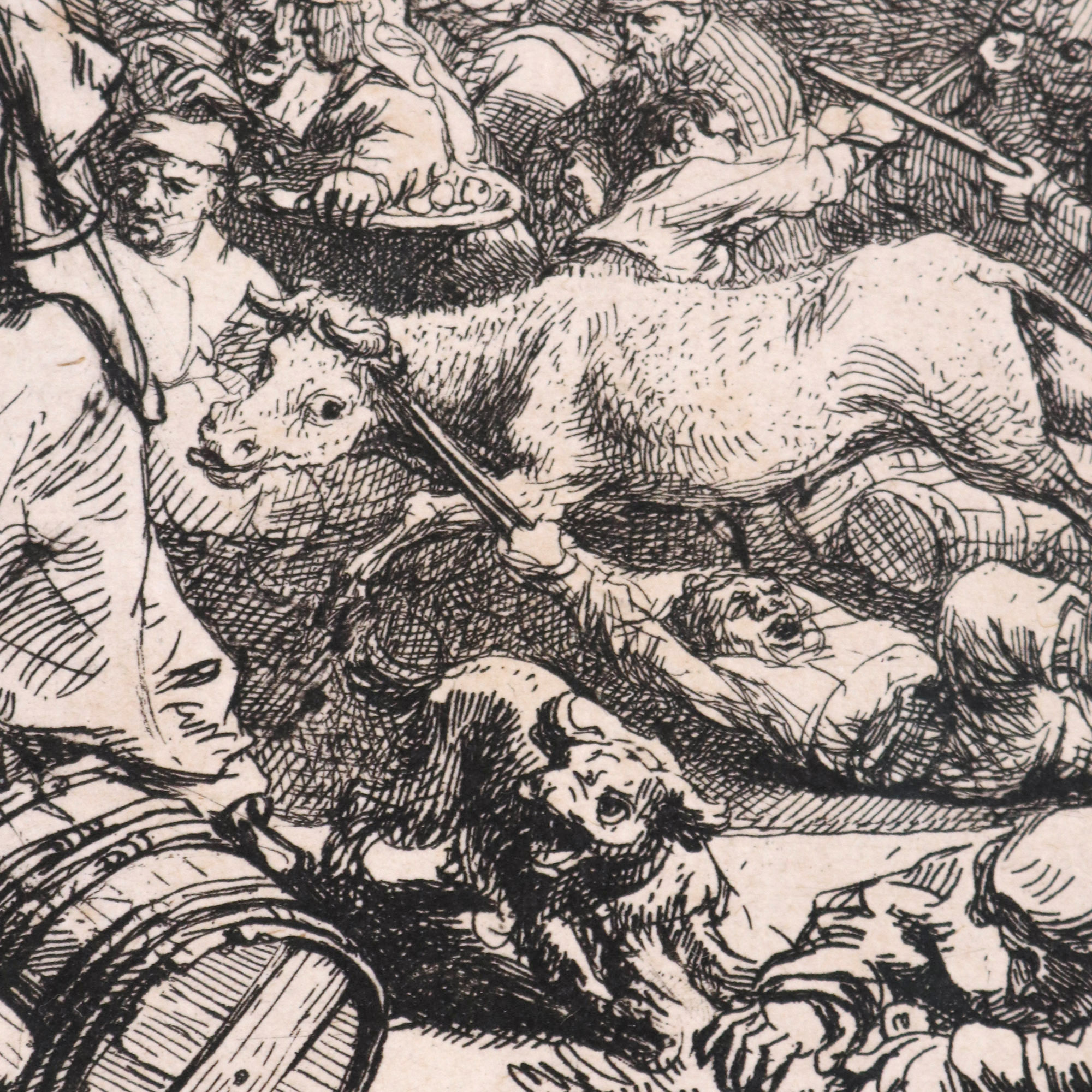
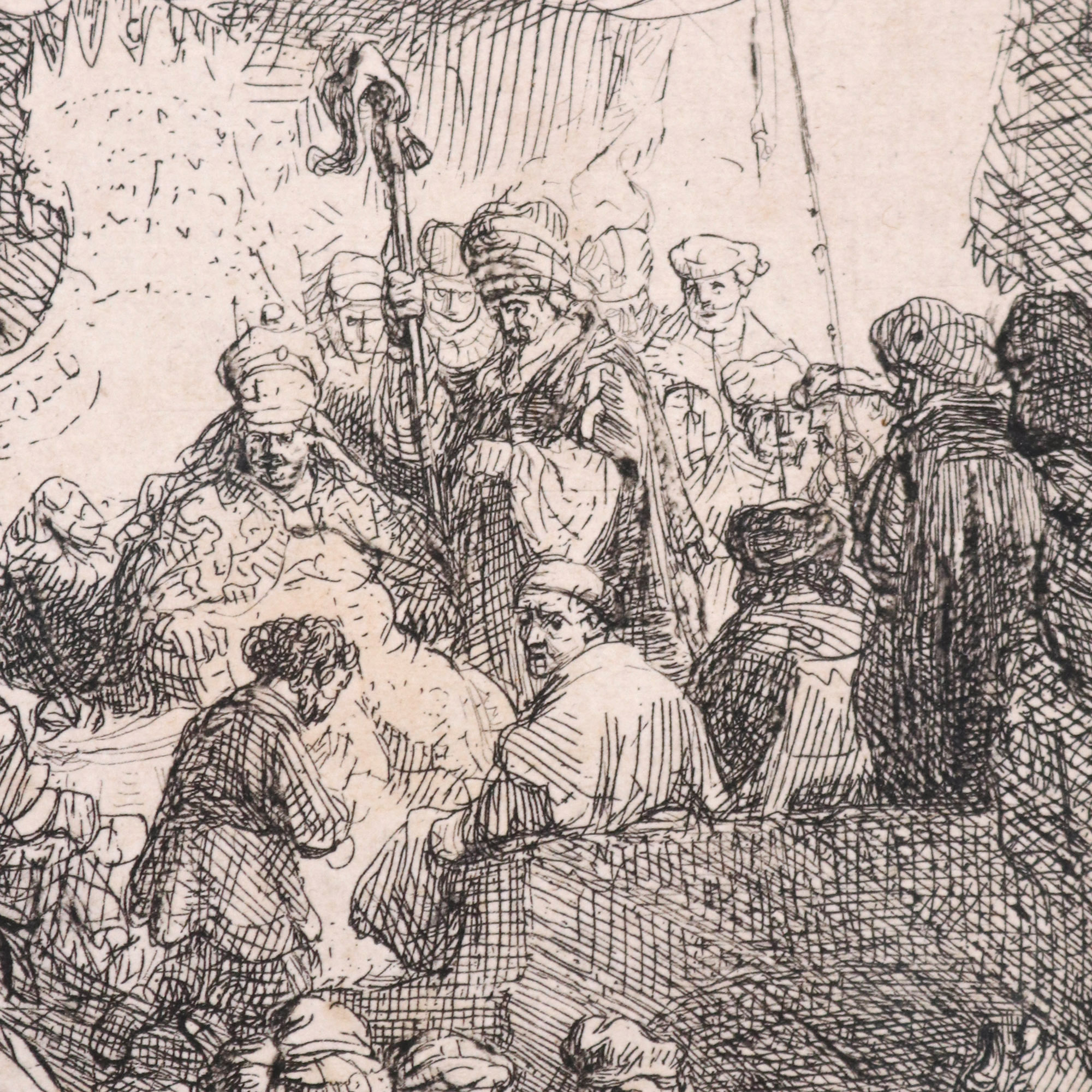
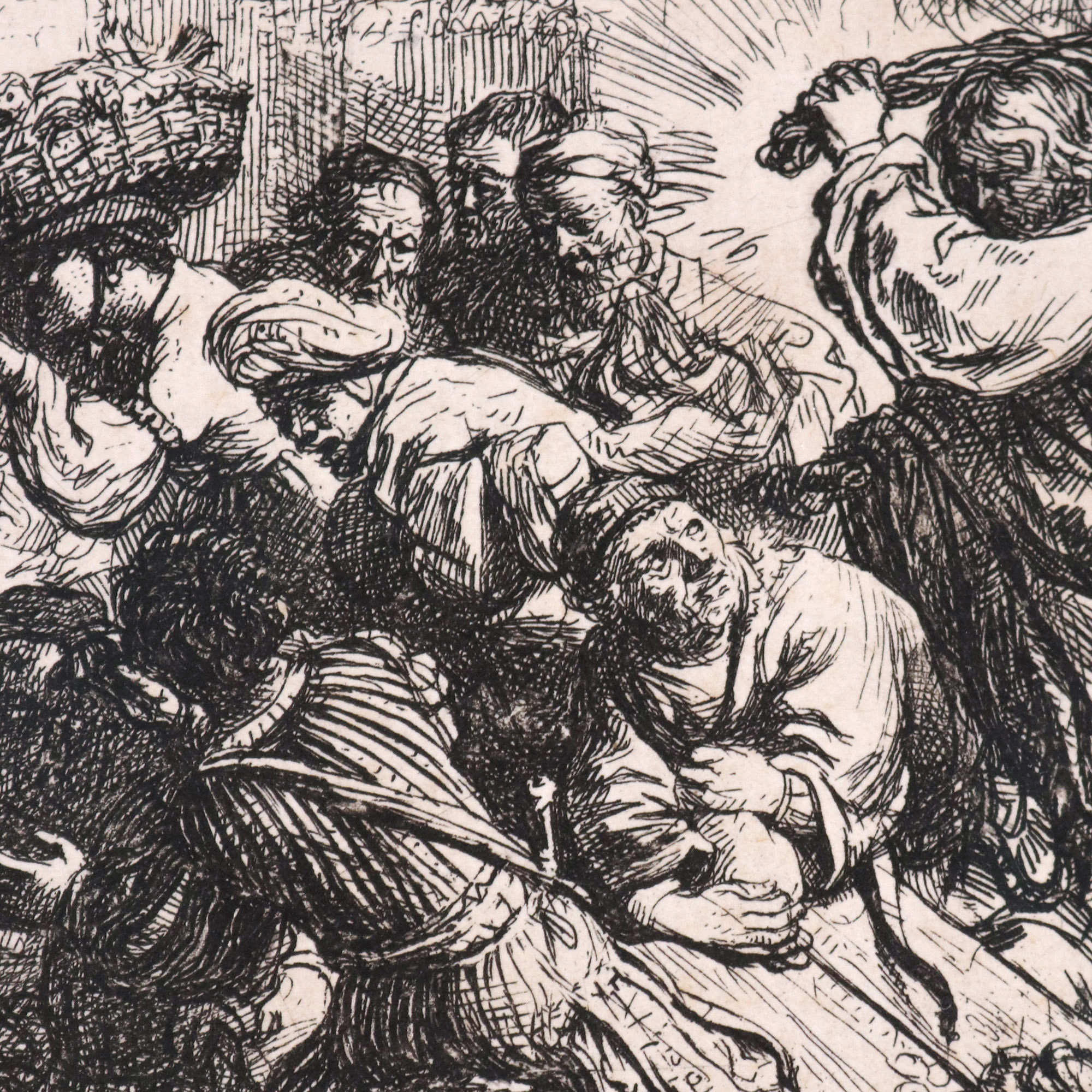
The Print is in a good state of preservation Sheet trimmed at the plate edges, but with the fine lines outside the border. Signs of aging in the paper—the sheet is nearly 400 years old!—minimal foxing, mainly visible on the reverse. Otherwise, a beautiful impression of the first state (of four), printed strongly, with great clarity and contrast. |
artist
|
Rembrandt Harmenszoon van Rijn was born in Leiden, the Netherlands, in 1606 and died in Amsterdam in 1669. Rembrandt is considered one of the most important and best-known Dutch artists of the Baroque period. His work coincided with the era of the Golden Age, when the Netherlands experienced a period of political, economic and artistic prosperity. Rembrandt studied under Pieter Lastman, opened his first studio in Leiden in 1625 and soon attracted attention. In 1631 he moved to Amsterdam, where he became a celebrated artist. Nevertheless, he suffered from considerable financial problems at times, went bankrupt in 1656 and died in poverty. Rembrandt worked as a painter, etcher and draughtsman, ran a workshop and trained artists. His complete works include portraits, landscapes, and biblical and mythological subjects. Source: This text is excerpted from the article Rembrandt van Rijn, which has been released under the GNU Free Documentation License. A list of authors is available at Wikipedia. |
e.artis safety
Art trade is a matter of trust.

Features and remarks
Here you have the opportunity to acquire an original etching by the world known Dutch master Rembrandt for your graphic art collection.
The etching ‘Christ Driving the Money Changers from the Temple’ was created in 1635 and depicts a scene from the New Testament. Jesus ‘cleanses’ the Temple in Jerusalem of merchants and money changers who sold sacrificial animals to pilgrims or exchanged coins. According to tradition, Jesus acts quite violently in doing so and preaches that the Temple, as a ‘house of prayer’, should be reserved for worship.
Rembrandt and Jesus in the Temple
From the beginning of his career until the end of his life, Rembrandt was fascinated by the events that took place in the Temple in Jerusalem during the time of Christ. He created at least twenty-two works depicting Jesus' interactions with the priests or members of the temple community or illustrating the ceremonies that took place there.
Jesus' relationship with the temple is characterised by stark contrasts. During his childhood, it is rather positive and focuses on his ritual introduction to the religious community. Later, in the context of his Passion, however, his relationship with the temple, its prevailing practices and its elites is marked by intense conflict and criticism.
Rembrandt, who was inspired by an earlier woodcut by Dürer in his depiction of Jesus, treats the motif of the cleansing of the temple in his own distinctive way. Full of realism, humour and drama.
„Rembrandt depicts the expulsion of the merchants from the temple as a burlesque circus scene, which is meant to be serious but is full of highly amusing motifs. Christ, a rough butcher's apprentice, rages among the weak shopkeepers, swinging a whip above his head. [...] Everyone runs, saves themselves, flees. But the most amusing thing is how, at the same time, a sacred ceremony can take place nearby, almost undisturbed. Rembrandt cannot really be accused of being overly intellectual or symbolic here.“
Richard Hamann, 1906
Rembrandt's etchings, his free, painterly approach to the medium and his technical mastery have been instrumental in establishing his worldwide fame. This is the first state of the plate before it was reworked by another hand. These originals are very rare on the market.Since the 17th century, they have been sought-after collector's items and have inspired generations of artists as role models.
Book Video Call to see the original artwork and talk to an expert!